
🇺🇸 New U.S. Tariffs on Vietnam: What It Means for the IT Industry and the Economy
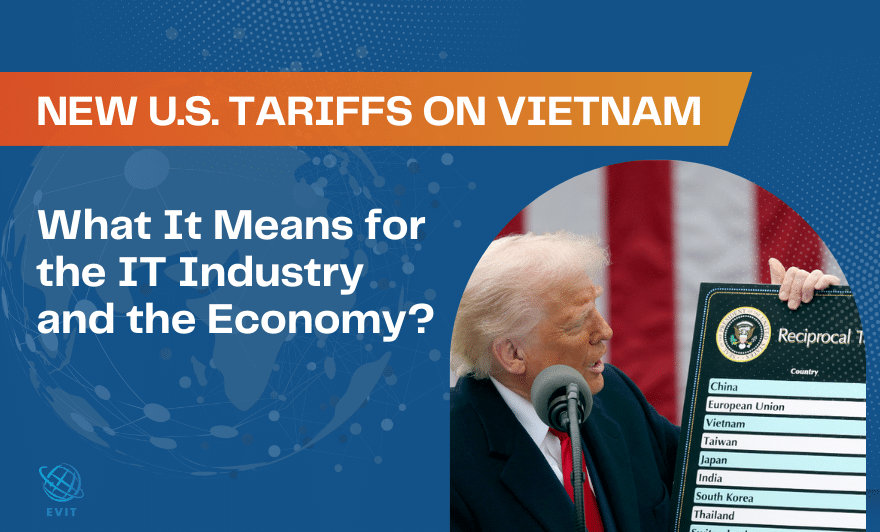
On April 3, 2025, former U.S. President Donald Trump announced a 46% tariff on all Vietnamese imports. The justification? Addressing what he called “unfair trade imbalances.” But for Vietnam — and especially its booming IT industry — this move could trigger serious disruption.
Let’s break down the potential implications.
🔧 The Impact on Vietnam’s IT Industry
Vietnam’s IT sector has been one of its major export strengths, especially in the last 10 years. With more than 10,000 software engineers serving global clients and a rising number of Western companies setting up delivery centers in the country, Vietnam became a preferred outsourcing hub.
But this new tariff introduces several risks:
-
Higher prices for U.S. clients: A 46% tariff significantly increases the cost of importing services and digital products. U.S. clients may pause, renegotiate, or cancel contracts with Vietnamese providers.
-
Reduced competitiveness: Vietnamese IT companies, known for affordability and quality, will now face pricing pressure. This could push potential clients toward other countries like India, the Philippines, or even Eastern Europe.
-
Need to diversify markets: Many companies focused heavily on the U.S. market. This tariff is a clear signal that relying on one region is risky. Firms will now need to explore Europe, Australia, the Middle East, or Southeast Asia more seriously.
📉 Broader Economic Consequences
Vietnam’s economy is export-driven, and the U.S. is a key trade partner — accounting for nearly 30% of Vietnam’s total exports. This tariff could have a massive macroeconomic impact.
Here’s what we may see next:
-
A 6% drop in GDP, according to preliminary analysis. Industries like electronics, garments, and footwear — all major export categories — will be hit hard.
-
Supply chain shifts, as companies rethink where to base production and delivery centers.
-
Increased pressure on the Vietnamese government, which is already forming a task force and preparing to negotiate with U.S. counterparts to reduce the damage.
⚠️ What Should IT Businesses Do Now?
This isn’t just a political move — it’s a market shift. Here’s what companies in the IT sector can start doing immediately:
-
Re-evaluate your market strategy – If 80% of your clients are in the U.S., it’s time to reduce that risk.
-
Focus on value, not just price – Tariffs will affect the cost, but not the quality. Double down on innovation, communication, and specialization.
-
Explore nearshore partnerships – Look at markets with lower trade risks or start building regional alliances.
-
Invest in brand and trust – When costs rise, clients buy from companies they trust. Marketing and positioning matter more than ever.
🌍 Final Thoughts
This 46% tariff is more than a headline. It’s a potential inflection point for Vietnam’s tech industry.
For years, Vietnam has built its reputation as a reliable, skilled, and cost-effective outsourcing destination. That’s still true — but now, companies must learn how to adapt to new trade realities. Those who move fast, diversify, and build stronger international relationships will turn this challenge into a long-term advantage.
If you’re a business leader in Vietnam’s IT sector and unsure how to navigate this change, I’m happy to exchange thoughts or share more insights. Feel free to reach out.
#VietnamEconomy #USVietnamRelations #ITIndustry #SoftwareOutsourcing #Tariffs #DonaldTrump #GlobalTrade #DigitalEconomy #BusinessStrategy #VietnamTech #Consulting #AsiaBusiness #TechPolicy